
How to Organize a Small Warehouse on a Limited Budget
Discovering you have too little warehouse space is a typical issue that grows over time. At the beginning, the shelves are fine, but later, you can hardly even walk among the boxes. You shouldn’t think about relocating to a larger warehouse before realizing that the majority of small warehouses use less than 60% of their potential storage space. Moreover, the solution is almost free.
Start With Vertical Space, Not Floor Space
The ground is taken! What about the ceiling?
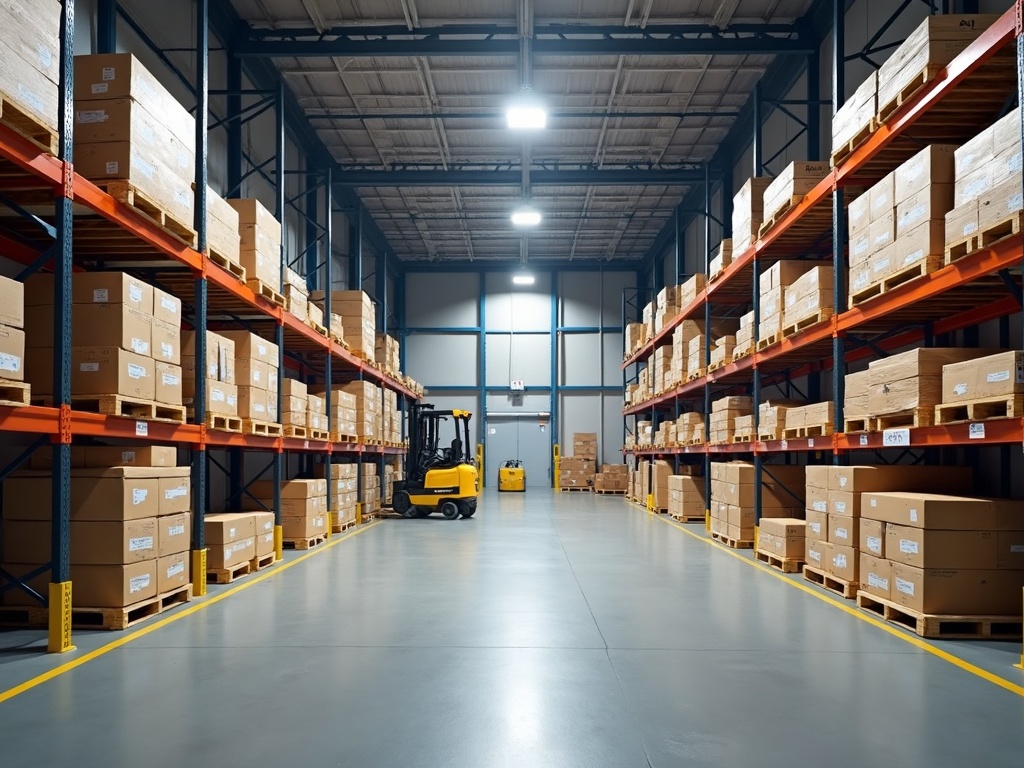
Most small warehouses have 6 to 10 metres of usable height and pallet racking that only goes up 2 or 3 metres. That gap is wasted money. Investing in taller racking to reach your ceiling clearance – with appropriate fall protection, rated uprights, and compliance with local safety codes – can effectively double your storage capacity without leasing an extra square metre.
If your ceiling height allows it, mezzanine flooring is another option. It’s a structural intermediate level that creates a second floor inside your existing space. It’s not cheap to install, but it’s dramatically cheaper than relocating, and it permanently solves a footprint problem rather than delaying it.
The key when going vertical is aisle width. Narrow aisles allow more rack rows but need smaller handling equipment. Standard forklifts need around 3.5 metres to turn. If you switch to a reach truck or electric stacker, you can tighten aisles to 2 to 2.5 metres and fit more rack runs in the same building. That trade-off alone can add 20-30% more storage positions.
Cut Infrastructure Costs With Second-hand Equipment
New pallet racking is expensive. A fraction of that cost is spent on refurbished racking scavenged from a closed warehouse or sold on by an equipment reseller. As long as it’s in good nick and installed properly, it does the same structural job.
The same goes for pallets. People storing stock on pallets don’t need to be the first owner of those pallets. Sourcing a Used Pallet in Melbourne or equivalent local supplier slashes materials costs and you lose nothing in storage terms because by and large, a pallet’s a pallet.
Checking for cracked or missing boards, bent nails, and damaged bearer blocks is common sense before buying second-hand but other than that, used equipment is where a small warehouse budget should start from, not aspire to.
Slot Your Inventory By Velocity
Did you know that up to 50% of a warehouse picker’s work time is spent walking (Georgia Institute of Technology)? This fact should give you a different perspective on where you store your items.
The solution is to use the ABC analysis method. You categorize your products by how frequently they are picked. Your Class A products – the 20% of SKUs that account for about 80% of your picks – should be stored at waist height, near the packing and dispatch area. No need to bend, use ladders, or walk to the back to get to them. Your Class B products are stored in the mid-zones. Your slow-moving Class C products are stored in those hard-to-reach places: the high shelves, the rear bays, or the off-site overflow.
Implement a SKU profiling system, which considers the size and weight of the products, not just their pick frequency. A bulky slow-mover shouldn’t be at waist height just because it’s heavy. And a small, fast-moving item that requires FIFO (first in, first out) should be stored in such a way that the oldest products are always at the front. Map this just once, and watch your picking time decrease significantly.
Run A 5S Event Before Buying Anything
Before you make any investments in racking or equipment, spend one weekend implementing the 5S process: Sort, Set in order, Shine, Standardize, Sustain.
An uncluttered warehouse is more space-efficient. The Sort phase alone tends to free up 15-25% of floor space. Take a roll of red tags and walk every aisle. Tag anything that hasn’t moved in 90 days, anything broken, and anything that has no clear purpose. Dead stock is the most expensive stock in a warehouse. It takes up space that productive inventory could be using.
After the red-tag event, remove the tagged items. Return them, donate them, liquidate them, or bin them. Then reorganize what’s left using the velocity-based slotting logic above.
Build A Labeling System Before You Need One
Mistakes happen more frequently once your warehouse starts expanding. No, a new piece of software isn’t what you need. What will help is a uniform alphanumeric addressing system for every rack, shelf, and bin.
Designate each rack a letter (A, B, C), each bay a number, and each shelf level a number. Bin A-3-2 is rack A, bay 3, shelf 2. Print out labels with a cheap thermal printer and stick consistently. Use color-coded floor tape for walkways, staging zones, and hazard areas. This costs a day’s work and saves hundreds of hours in lost time over the course of the year.
The thing that separates a small chaotic warehouse from a small functional one is almost never cash. It’s method, order, and the effort to look after your things.